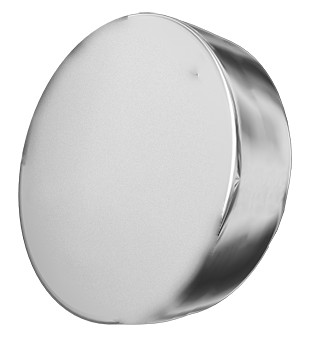
Zinc-air hearing aid cells
Zinc-air cells draw oxygen from the air through small holes under the tab, which gives them high energy density for their size. They stay inactive until the tab is removed, so shelf life is long.
| Size | IEC | Diameter × height | Tab color |
|---|---|---|---|
| A10 | PR70 | 5.8 × 3.6 mm | Yellow |
| A312 | PR41 | 7.9 × 3.6 mm | Brown |
| A13 | PR48 | 7.9 × 5.4 mm | Orange |
| A675 | PR44 | 11.6 × 5.4 mm | Blue |
Low-gassing construction supports mercury-free performance and reduces leakage risk inside hearing aids and wearables.
Used in: hearing aids of every style, personal sound amplifiers, and sound processors that use A675 cells.
Design notes
- The cell starts working when the tab is removed. Allow a short rest after activation before applying full load.
- Give the cell an air path: the compartment can't be sealed against the air holes under the tab.
- Output shifts with humidity and temperature. Once activated, plan for a service life of days to weeks, depending on load.
- Peak current is limited by how fast oxygen reaches the cathode. Check wireless streaming and other pulse loads against the datasheet.
- A312 and A675 share dimensions with alkaline LR41 and LR44. Mark the compartment if only zinc-air should be fitted.
Datasheets, RoHS and REACH declarations available. Request documentation